

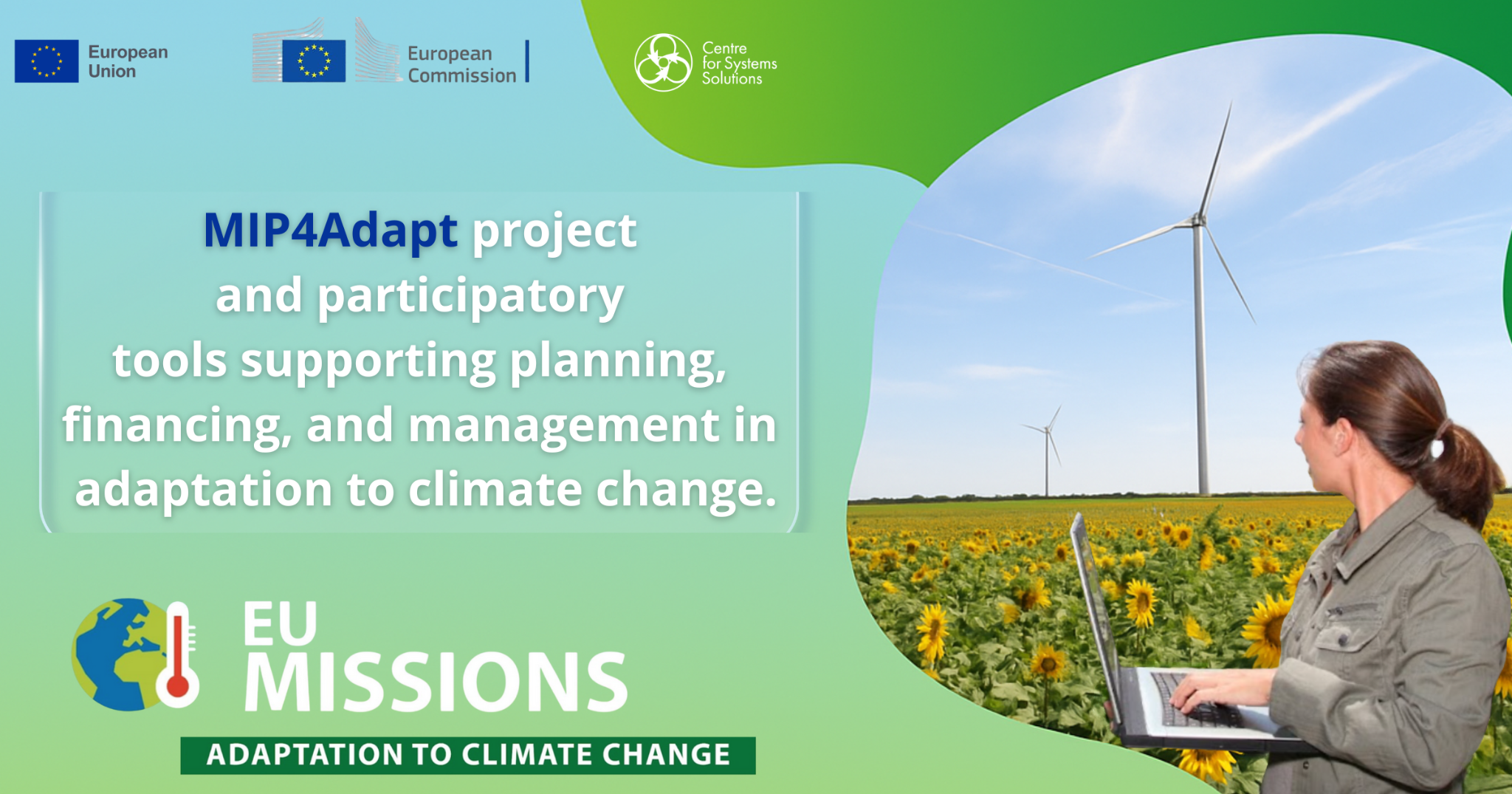
MIP4Adapt at conference in Olsztyn
On February 19th–20th 2026, Katarzyna Szewczyk took part in the conference “Warmia and Mazury in the Era of a Changing Climate”, summarising the Pathways2Resilience Warmia and Mazury project. The event was organised in cooperation between the University of Warmia and Mazury and the Marshal’s Office of the Warmia and Mazury Voivodeship.
During the meeting, we presented the results of MIP4Adapt, a two-year project we have been implementing as the Polish National Moderator for the EU Mission Implementation Platform – MIP4Adapt (the project was primarily executed by Anna Dubel, Karolina Królikowska, Krzysztof Dubel). Much like the Pathways2Resilience project, it is a “sister project” of the EU Mission on “Adaptation to Climate Change” under the EU Horizon Europe Programme.
During the conference, Katarzyna Szewczyk delivered a presentation titled “MIP4Adapt and participatory tools supporting planning, financing, and management in adaptation to climate change” and participated in an expert panel discussion. The presentation summarized the progress and outcomes of the MIP4Adapt project. It also introduced participatory methods used in other projects related to climate mitigation and adaptation that we are implementing, such as GRACE, Tales of Carbonia, PLUS Change, and Food Alert. The wide range of activities presented highlights both the multifaceted challenges of climate change and the diversity of tools and competencies available for stakeholder engagement.
Our speaker prepared the presentation materials in collaboration with the project coordinator – Anna Dubel, as well as Piotr Magnuszewski and Michalina Kułakowska.
The two-day event was attended by representatives of public administration, the scientific community, research institutes, non-governmental organizations, and other institutions involved in climate change adaptation efforts.
The conference provided an excellent opportunity for a broad exchange of experiences regarding the substantive, administrative, and participatory aspects of adaptation actions.

Recent Comments